In the world of electronics, quality and innovation really go hand in hand. You’ve probably heard of Conductive Glass Factories—they’ve become pretty important players in this space. These factories mainly focus on making advanced conductive glass that can be used in all sorts of applications. The top factories don’t just care about performance either; they’re also big on sustainability and eco-friendly practices.
Big names like AGC Glass Europe and Xinyi Glass Holdings are leading the way with new ideas—constantly working on materials that boost functionality while still meeting tough manufacturing standards. But hey, even the most reputed producers run into some problems sometimes. Some products might not be as durable or reliable as they’d like. That makes it clear how crucial it is to have strict quality control in place.
Looking ahead, the future of conductive glass is really about finding that sweet spot between innovation and dependability. Everyone involved needs to stay sharp—keeping an eye on the latest products and trends. As technology moves forward, factories need to be quick on their feet to adapt. The most successful ones won’t just make better products; they’ll also keep pushing to get better all the time, fostering a culture of ongoing improvements.

The Importance of Conductive Glass in Modern Technology
Conductive glass is becoming essential in modern technology. It is not just any ordinary glass. Its unique properties enable it to conduct electricity while providing transparency. This combination is valuable in various applications, from touchscreens to solar panels. As a result, industries are increasingly exploring the potential of conductive glass.
The importance of conductive glass lies in its ability to enhance device functionality. For example, it allows touch sensors to work efficiently. This efficiency leads to better user experiences. However, not all conductive glass is made the same. Variability in quality can lead to inconsistent performance, which is a challenge for manufacturers. It raises questions about the standards in the industry. Ultimately, the push for innovation should not overshadow the need for quality.
In a world driven by technology, the choice of materials matters immensely. Conductive glass plays a pivotal role in many innovative solutions. Whether in energy-efficient devices or advanced display technologies, its relevance is clear. However, ongoing research is crucial to address limitations. Exploring new materials and methods could unlock even greater potential. Thus, stakeholders must invest in both innovation and quality assurance.
Leading Manufacturers of Conductive Glass: A Global Overview
The global conductive glass market is witnessing remarkable growth. Current estimates show a compound annual growth rate (CAGR) of 12% over the next five years. This implies increasing demand in sectors like electronics and renewable energy. The versatility of conductive glass makes it suitable for touch screens, solar panels, and more.
Leading manufacturers focus heavily on research and development. A recent industry report highlighted that about 25% of revenue is reinvested into innovation. However, challenges remain. Quality control is often inconsistent across different suppliers. This raises concerns about durability and performance in various applications. The need for robust testing methods is critical to ensure reliable products.
Geographically, Asia-Pacific is emerging as a manufacturing hub. The region produces nearly 40% of the world’s conductive glass. This concentration can lead to supply chain vulnerabilities. Economic shifts or natural disasters may disrupt production. As manufacturers evolve, they must address these risks to maintain their competitive edge.
The Best Conductive Glass Factories for Quality and Innovation
This chart displays the comparison of production quality and innovation metrics from various leading conductive glass manufacturers globally. The data is measured on a scale from 1 to 100, where higher values indicate better performance in the respective category.
Innovative Technologies Driving Conductive Glass Production
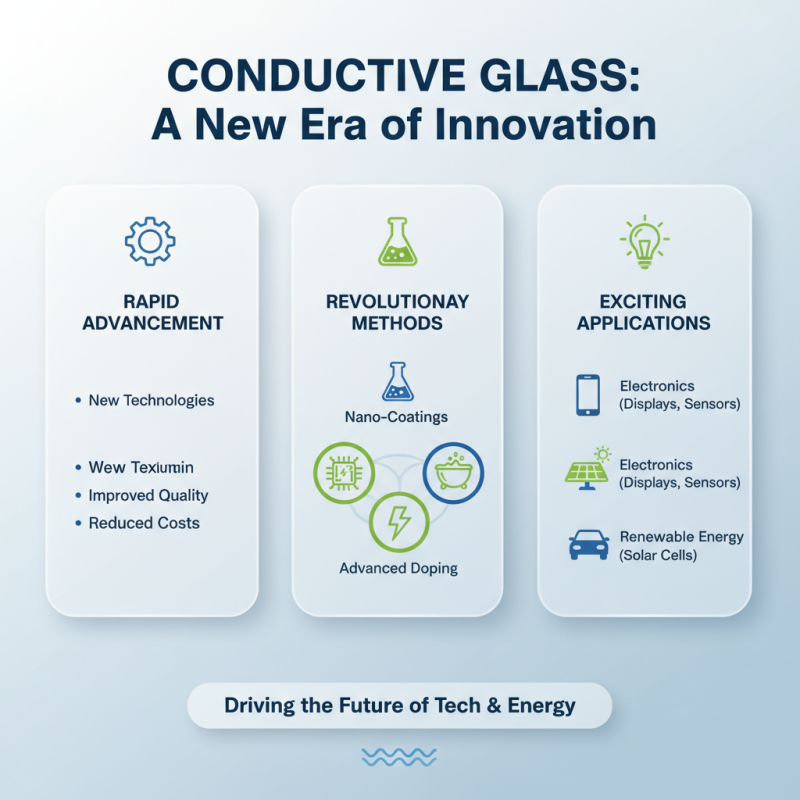
The production of conductive glass is experiencing rapid advancement. Innovative technologies are revolutionizing how this material is made. Manufacturers are exploring new methods to enhance quality while reducing costs. These developments lead to exciting applications in areas like electronics and renewable energy.
One of the critical technologies is advanced coating processes. These techniques improve the glass's conductivity and transparency. However, manufacturers often struggle with consistency. Variations in application can affect the final product's performance.
Tips: Regularly monitor the coating process to ensure uniformity. This adjustment can significantly enhance quality. It's essential to engage in continuous training for staff on new technologies. This investment can lead to more innovative solutions and fewer mistakes.
Additional technologies include smart glass solutions. These products can adapt to environmental changes. Yet, the challenges in maintaining efficiency exist. Manufacturers must focus on integrating complex systems without increasing production time. A balance between innovation and practicality is crucial for success.
Quality Standards in Conductive Glass Manufacturing
Quality standards play a crucial role in conductive glass manufacturing. This material is essential for various applications, including displays, touchscreens, and solar panels. Manufacturers must adhere to stringent quality criteria to ensure optimal performance. Such criteria often encompass thickness, transparency, and conductive properties.
In practice, achieving these standards can be challenging. Variations in raw materials or production methods can lead to inconsistencies. Some factories might struggle with defects, which can affect product reliability. Regular audits and quality checks can help identify these issues early. However, not all factories maintain the same level of diligence.
Innovation alongside quality is key. Many manufacturers attempt to integrate new technologies while improving their processes. This often requires significant investment and careful planning. Some factories have succeeded, while others fall short in execution. Continuous improvement is necessary, and feedback from clients can be invaluable in this regard. Investing in quality leads to better reputation and sustainability.
The Best Conductive Glass Factories for Quality and Innovation - Quality Standards in Conductive Glass Manufacturing
| Factory Location |
Production Capacity (sqm/year) |
Quality Certification |
Innovation Index (1-10) |
Sustainability Rating (1-5) |
| North America |
500,000 |
ISO 9001, ISO 14001 |
8 |
4 |
| Europe |
750,000 |
ISO 9001, CE |
9 |
3 |
| Asia |
1,000,000 |
ISO 9001, RoHS |
7 |
5 |
| South America |
300,000 |
ISO 9001 |
6 |
3 |
| Africa |
200,000 |
ISO 9001 |
5 |
2 |
Market Trends and Demand for Conductive Glass Solutions
The market for conductive glass is expanding rapidly. Recent reports suggest a growth rate of over 7% annually. Innovations in technology drive this trend. Industries are increasingly adopting conductive glass for its unique properties, including transparency and conductivity. This demand is evident in sectors like electronics and renewable energy. For example, solar panels now incorporate conductive glass to improve efficiency.
Tips: Consider sustainability when choosing a manufacturer. Eco-friendly practices are becoming essential in production.
Consumer awareness also influences demand. More users seek quality and durability. The rise of smart devices boosts the need for conductive glass. As a result, production standards must evolve. Some manufacturers struggle to keep up with technological advancements. Inconsistent quality remains a concern. Customers need to be vigilant when selecting suppliers.
Tips: Research customer reviews and case studies before purchasing. Make informed decisions to avoid pitfalls.
Overall, the conductive glass market faces challenges. However, the innovation potential remains high. The ongoing developments promise many opportunities for manufacturers willing to adapt. Balancing quality with cost-effectiveness will be key.
Key Applications of Conductive Glass in Various Industries
Conductive glass has become a vital component in many industries. Its versatility makes it suitable for touch screens, solar panels, and smart windows. In the electronics sector, conductive glass helps create responsive touch interfaces. Many devices now rely on this technology for user interaction. It is fascinating to see how it enhances usability.
In the energy industry, conductive glass is used in photovoltaic cells. It plays a significant role in converting sunlight into electricity. This application shows promise for renewable energy solutions. However, there are challenges in scaling production while maintaining quality. Innovations are needed to overcome these obstacles and improve efficiency.
Architectural applications also showcase conductive glass’s potential. It enhances energy-saving features in buildings. This technology allows windows to be dynamic in adjusting heat and light. Still, there is a lot to explore in terms of durability and cost-effectiveness. Companies need to reflect on these areas for future improvements.
Sustainability Practices in Conductive Glass Factories
Sustainability is becoming a cornerstone of conductive glass manufacturing. In recent years, factories have adopted eco-friendly processes. According to a 2022 industry report, over 60% of leading manufacturers have implemented renewable energy sources. This transition reduces reliance on fossil fuels and lowers carbon footprints.
Water management is another focus area. Conductive glass production can consume significant water resources. A recent survey noted that some factories have cut water usage by 30% through recycling and rainwater harvesting. Yet, not all factories are on board. Many still face challenges in technology adaptation.
Waste reduction also plays a crucial role. The best factories aim for zero waste during production. Yet, only 25% have achieved this goal. Many still struggle with excess materials. Continuous improvement is necessary. This highlights opportunities for innovation and efficiency in the industry. As the demand for sustainable products grows, factories must reevaluate their practices. The future relies on a commitment to both quality and responsibility.
Innovative Design and Durability: Exploring the Benefits of 6-19mm Decorative Frosted Tempered Glass for Stylish Interiors
Frosted tempered glass has emerged as a popular choice for elevating interior spaces, thanks to its innovative design and myriad benefits. The 6-19mm thick decorative panels boast a sophisticated acid-etched finish, resulting in a permanent frosted effect that enhances aesthetic appeal while also providing functionality. This unique surface finish not only creates a soft, diffused light in any room but also resists fingerprints and smudges, making it an ideal option for busy environments where maintenance can be a concern.
Durability is another standout feature of frosted tempered glass. Its toughened strength withstands daily wear and tear, ensuring that it remains a stylish and practical option for tabletops, desks, and various surfaces. Whether used in a dining area or a modern office, this glass lends a timeless elegance that complements contemporary interiors. The combination of beauty and brawn makes it a smart investment for anyone looking to enhance their space with a touch of sophistication.
FAQS
: The article discusses various topics related to daily life. It emphasizes practical tips for improvement.
Set clear goals. Break tasks into smaller steps. Eliminate distractions to stay focused.
Good time management helps prioritize tasks. It reduces stress and improves overall efficiency.
Many struggle with procrastination. It can hinder progress and lead to missed deadlines.
Start small. Make gradual changes to your routine. Track your progress over time.
Ensure goals are specific and achievable. Regularly review them to stay on track.
Conclusion
Conductive glass has become an essential component in modern technology, serving a variety of applications across multiple industries. The article explores the significance of conductive glass factories, focusing on leading manufacturers worldwide that are pushing the boundaries of quality and innovation. It highlights the innovative technologies being adopted to enhance production efficiency and the stringent quality standards that ensure the reliability of the products.
Furthermore, the article delves into current market trends and the increasing demand for conductive glass solutions, driven by advancements in sectors such as electronics, automotive, and renewable energy. Additionally, it emphasizes the sustainability practices being implemented in conductive glass factories, underscoring the industry's commitment to environmental responsibility while meeting consumer needs.